

In the production of refractory materials, the breakage rate and dimensionally unqualified products of magnesia-carbon bricks have long been a cost burden for enterprises. Traditional waste treatment methods are inefficient, generate heavy dust, and struggle to guarantee the uniformity of particle size in recycled raw materials, which directly affects the quality of new bricks. The Sihyde Mgo-C Brick Crushing Line is specifically designed for the efficient recycling and reutilization of waste magnesia-carbon bricks. Centered on a closed-loop circulating crushing system, it integrates intelligent control, precise screening, and environmental-friendly dust removal technologies, enabling waste materials to be reprocessed into recycled raw materials with standard particle sizes, thereby helping enterprises reduce raw material costs and achieve green production.
Circulating Crushing System
Closed-loop control logic: The crushing line is equipped with a dedicated return belt conveyor that automatically sends oversized particles after the first crushing back to the main crusher. This process can be repeated multiple times until the material particle size fully meets the standard, fundamentally preventing the discharge of unqualified materials and ensuring a pass rate of finished products ≥99%.
Flexible selection of crushers: In view of the high hardness and strong abrasion resistance of magnesia-carbon bricks, the line can be equipped with jaw crushers, roll crushers, or cone crushers as needed. With high crushing force and long service life of wear-resistant parts, it can stably handle various types of hard waste materials, ensuring long-term continuous operation efficiency.
Precise particle size adjustment: The output particle size can be customized as required, with a standard adjustment range of 0–5 mm or 0–10 mm. By changing the screen mesh aperture and setting the crushing parameters, the final product size can be precisely controlled to fully match the raw material requirements for regenerated magnesia-carbon brick production.
·
Intelligent Automatic Control
Unmanned full-process operation: The crushing line adopts a Siemens PLC control system and an industrial touchscreen to realize full automation from feeding, crushing, and screening to circulating return. The equipment can be started and stopped with one touch, requiring no manual intervention for material transfer or handling, thereby reducing labor costs and operational deviations.
Real-time monitoring and data management: The control system supports real-time monitoring and recording of operating status, fault alarms, and key process data. Operators can intuitively view the equipment condition through the interface, facilitating production management and problem traceability.
Safety interlock and access management: The crushing line is equipped with a comprehensive safety interlock mechanism that automatically shuts down when inspection doors are opened or under abnormal conditions. Key circulating crushing parameters and particle size settings require authorized access to prevent misoperation and ensure production safety.
Environmental and Modular Design
Dust-free working environment: The crushing line features a fully enclosed design throughout the process, complemented by a dedicated negative-pressure dust removal system and dust collection devices. This design effectively suppresses dust fugitive emissions at all stages—crushing, screening, and conveying—improving workshop air quality and meeting occupational health and safety as well as environmental emission standards.
Compact and flexible structural layout: The crushing line adopts a modular design, allowing each functional unit (e.g., feeding, crushing, screening, conveying) to be flexibly combined. The layout can be customized according to the customer's workshop area, production capacity, and raw material stacking position, either as a standalone line or seamlessly integrated with existing production lines.
Convenient maintenance and replacement: The modular structure facilitates independent maintenance or replacement of wear parts such as crusher liners, screen meshes, and belts, reducing downtime and enhancing the overall equipment efficiency.
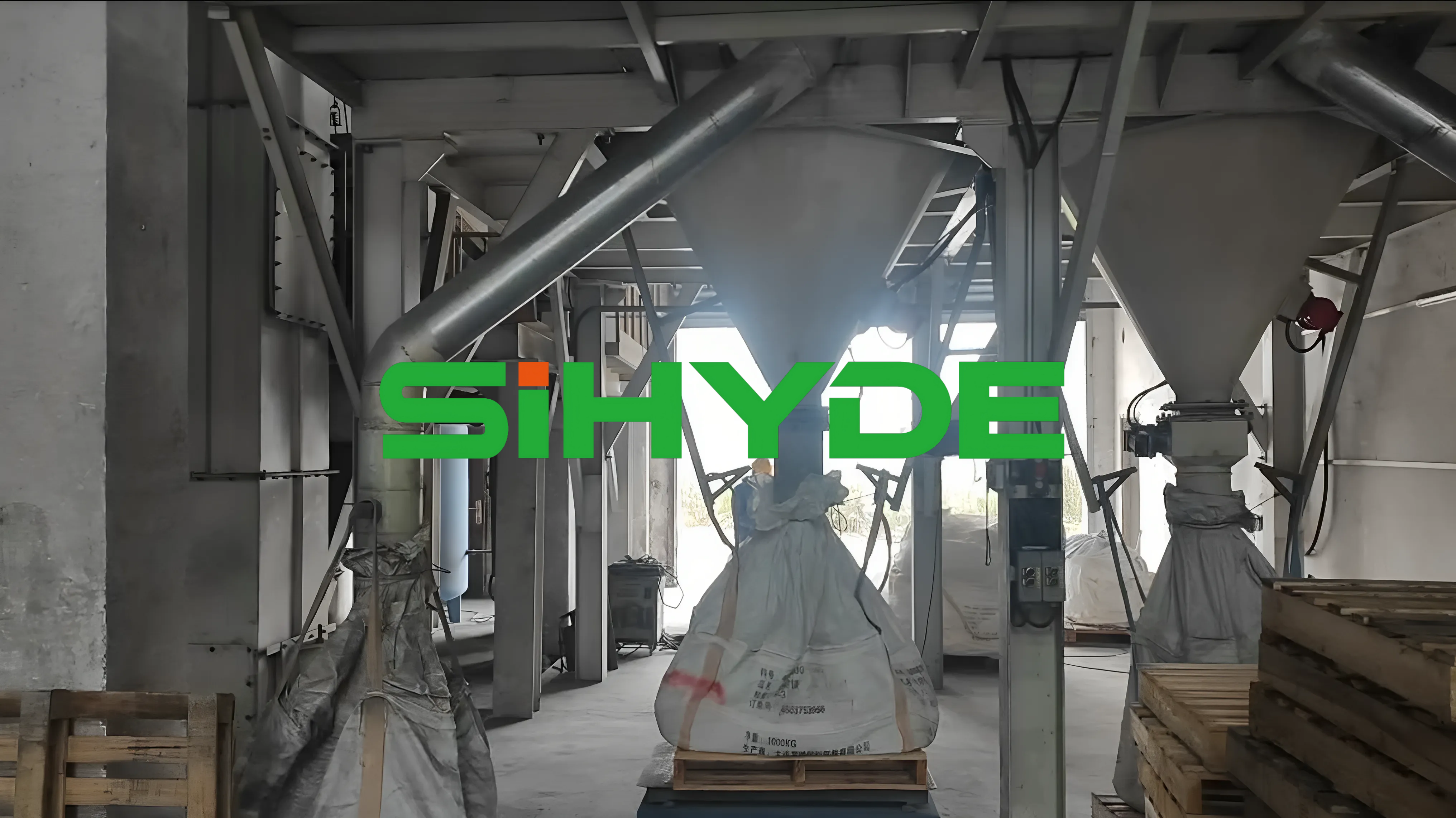
Applications in the Refractory Material Recycling Industry
Mgo-C brick production workshops: The crushing line is suitable for processing broken bricks, dimensionally unqualified bricks, and production waste generated in-house, enabling direct on-site recycling and rapid re-feeding into the batching process, significantly reducing raw material procurement costs.
Refractory material processing plants: The crushing line can serve as the core equipment of a professional waste recycling center, providing centralized crushing and screening services for waste refractory bricks from surrounding refractory enterprises, and producing standardized recycled refractory raw materials.
Recycling workshops in the metallurgical industry: The crushing line meets the needs of steel and non-ferrous metal smelting enterprises for volume reduction, classification, and resource utilization of waste refractories, supporting the construction of a circular economy system and reducing industrial solid waste emissions.
