

Spent magnesia-carbon bricks and rejected bricks are hard to handle at the end of a production line, and breakage plus inconsistent sizing keeps their recovery value locked away. The magnesia-carbon brick crushing and screening line from Qingdao Sihyde Automation Equipment Co., Ltd. applies closed-loop crushing and customized screening to bring particle size under control, turning refractory waste into reusable aggregate while cutting disposal pressure and lifting recovery efficiency.
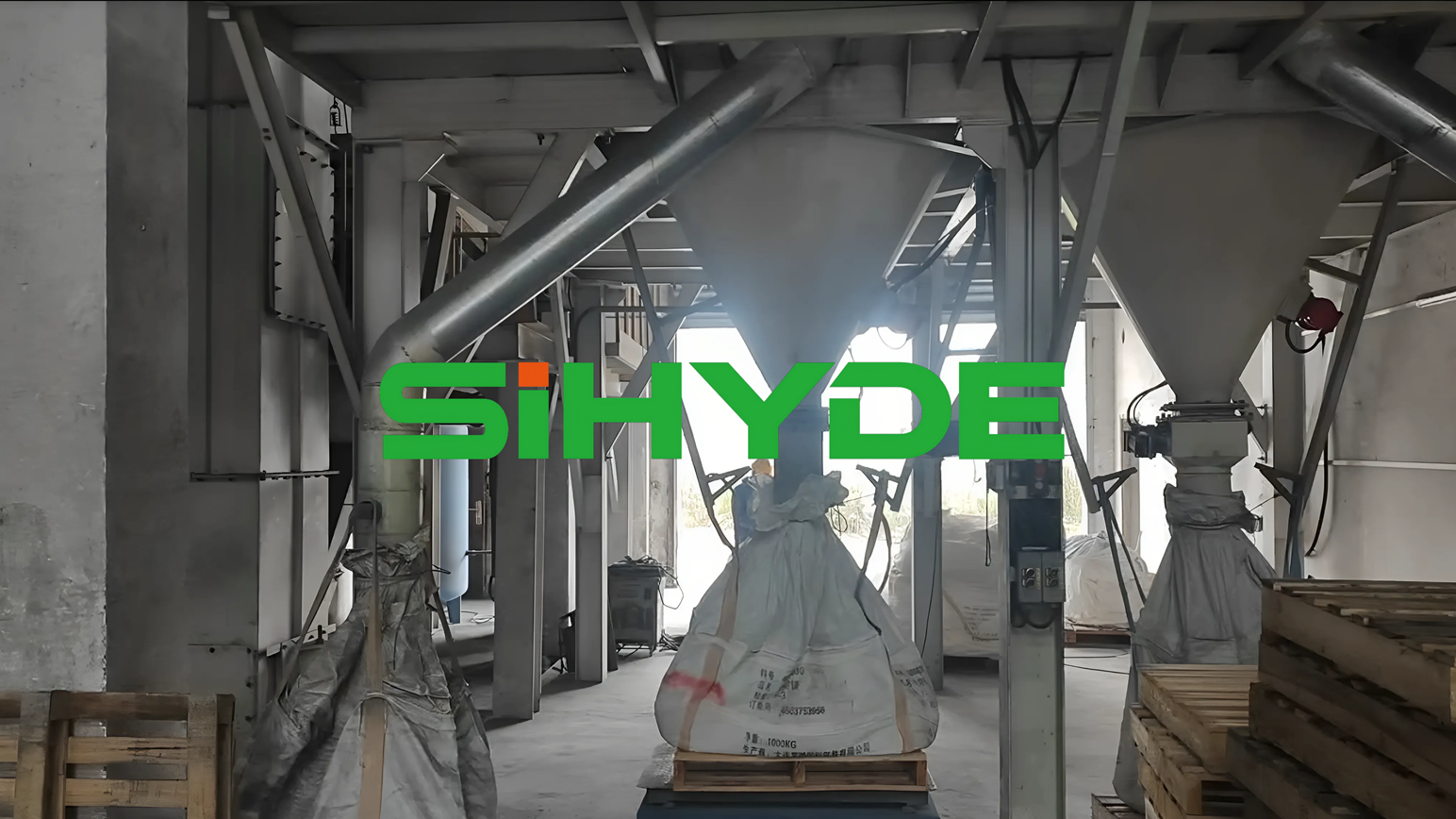
Crushing Host System
• Host selection: The crushing host can be configured with jaw, roll, cone, or impact crushers, used singly or in combination, to handle spent magnesia-carbon bricks, rejected bricks, and refractory brick scrap. It is the first processing stage of the line.
• Capacity coverage: Applicable capacity is 500–8000 t/year. The range suits everything from small recovery stations to continuous workshops, so investment can follow order volume and expand in stages.
• Primary size control: Coarse crushing prepares the material for screening, laying the foundation for on-spec granularity and a stable pass rate while reducing repeated circulation and energy fluctuation across the line.
Customized Screening System
• Screening configuration: A customized vibrating screen is matched to material hardness and target particle size through screen mesh specification and deck count, which suits refractory recovery duty.
• Discharge size adjustment: Discharge size is adjustable between 0–5 mm and 0–10 mm. Undersize material passes, while off-spec particles return automatically for further crushing until they meet the target.
• Pass-rate target: The discharge granularity pass rate reaches ≥99%, keeping recovered aggregate dimensionally consistent for downstream batching and reuse.
Closed-Loop Recirculation System
• Return path: Oversized particles are conveyed back to the host by a dedicated return belt and may circulate repeatedly until they reach the target size, which is the heart of closed-loop operation.
• Process sequence: The line runs through feeding, crushing, screening, recirculation, and qualified discharge as a closed loop, with each stage paced by the central control system.
• Material reuse: Broken and off-size waste is reprocessed inside the loop, cutting outward transport and secondary handling so hard scrap keeps generating reusable value.
Control and Dust Collection System
• Control platform: Siemens PLC with an industrial touch screen provides centralized operation, status monitoring, and parameter recall from feeding through discharge.
• Dust collection: A fully enclosed design works with dedicated dust collection and negative-pressure dedusting, supported by safety interlock and modular construction, improving the workshop environment.
• Stable operation: The modular structure simplifies maintenance and capacity expansion, with unified service access and module interfaces that shorten downtime. The magnesia-carbon brick crushing line(https://www.sihyde.com/sihyde-magnesia-carbon-brick-crushing-line.html) can be laid out to match an existing recovery workshop.
Application Scenarios and Customer Cases
Three typical scenarios and one published project reference are summarized below for a first-pass match against your own scrap mix and reuse target.
Refractory Recovery and Disposal
• Waste types: The line handles spent magnesia-carbon bricks, rejected magnesia-carbon bricks, and refractory brick scrap, matching refractory recovery and spent-refractory recycling requirements.
• Case reference: A magnesia-carbon brick crushing and screening line in Anhui for refractory recovery runs at an applicable capacity of 500–8000 t/year with discharge size adjustable between 0–5 mm and 0–10 mm.
• Environmental result: The line is fully enclosed and equipped with dedicated dust collection and negative-pressure dedusting, reaching a discharge granularity pass rate of ≥99% while easing dust in the workshop.
Interface with Refractory Batching
• Line coordination: Recovered aggregate can feed a refractory batching system(https://www.sihyde.com/product/c-9.html) and automatic batching(https://www.sihyde.com/product/c-9.html) stages to close the reuse loop and extend recovery value.
• Unified control: Downstream stages can also adopt Siemens PLC with an industrial touch screen, keeping operating logic consistent across the whole line.
• Interface detail: Specific interface configuration, connection type, and interlock logic.
Custom-Engineered Recovery Lines
• Custom capability: The line is tailored to site area, capacity, and material characteristics, from feed inlet to discharge silo, matching existing workshop logistics and the current recovery process.
• Module combination: The crushing host can combine jaw, roll, cone, and impact crushers, while screening uses a customized vibrating screen to cover different hard materials and line rhythms.
• Delivery scope: Acceptance criteria, equipment list, and lead time are confirmed in the technical agreement and.
Frequently Asked Questions
Q1: Which materials can the magnesia-carbon brick crushing and screening line process?
A1: The line processes spent magnesia-carbon bricks, rejected magnesia-carbon bricks, and refractory brick scrap — hard refractory materials that can be recovered through crushing and screening.
Q2: How is the discharge particle size controlled?
A2: Discharge size is adjustable between 0–5 mm and 0–10 mm, and off-spec material is returned to the host by a dedicated return belt for repeated crushing until it reaches the target, with a pass rate of ≥99%.
Q3: Can the line be customized?
A3: Yes. The line is custom-engineered, and the crushing host can be a single jaw, roll, cone, or impact crusher or a combination of them, controlled by Siemens PLC with an industrial touch screen.
Conclusion
The magnesia-carbon brick crushing and screening line combines closed-loop crushing, customized screening, and integrated dust collection to turn hard refractory scrap into on-spec reusable aggregate. For refractory producers, that means less disposal pressure, a stable and verifiable pass rate, and a recovery loop that keeps paying back across every batch.
