

Sihyde's ceramic batching system is designed for the ceramic industry's characteristics of diverse raw materials and high batching-accuracy requirements, mainly solving three problems: powder absorbing moisture and caking, colorant weighing deviation and dust escape. Feldspar powder, quartz powder, kaolin and clay differ markedly in fineness and adhesiveness; colorants and fluxes are used in small amounts yet directly determine color. The system takes full-sealed moisture-proof conveying, dual-screw variable-frequency metering and an independent micro-colorant metering module as its backbone, opening moisture-proofing, anti-blocking, graded weighing and data traceability.
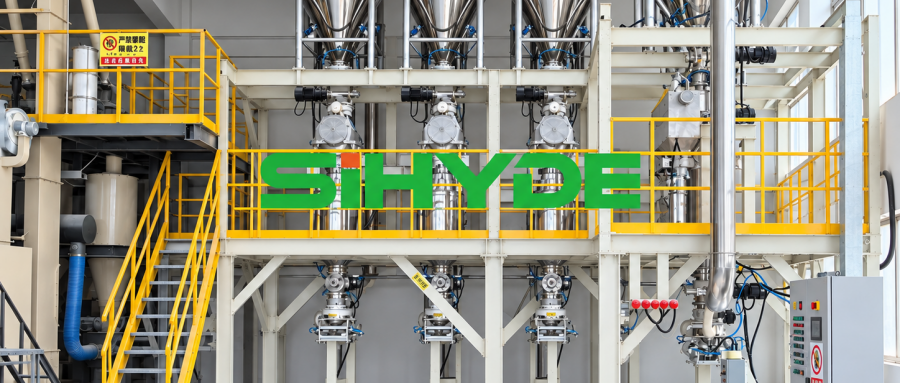
Full-Sealed Moisture-Proof and Anti-Blocking Conveying Module
Sealed pipeline moisture-proofing: Batching and conveying throughout use sealed pipelines with moisture-proofing and dehumidifying devices, reducing ceramic powder contact with outside moisture from the source, easing moisture absorption, caking and dust escape.
Special anti-blocking discharge: For easily adhesive materials such as clay, a special anti-blocking discharge device is configured, optimizing bin-bottom and pipeline channel structure, easing material pile-up retention and poor discharge.
Long-distance sealed pneumatic conveying: Powder completes long-distance transfer in sealed pipelines, reducing moisture absorption and cross-contamination from intermediate transfer, also adapting to the compact layout of ceramic workshops, a typical configuration of the custom-engineered batching system.
Graded Weighing and Dual-Screw Variable-Frequency Metering Module
Dual-screw variable-frequency metering: Fine control of material flow through variable-frequency speed regulation, and optimizing conveying structure for easily adhesive materials such as clay, balancing smooth discharge and metering stability.
Basic raw-material graded weighing: Basic raw materials such as feldspar powder, quartz powder and kaolin are automatically weighed by recipe ratio; powder weighing accuracy can reach ±0.5%.
Recipe quick calling: Supports multi-variety, small-batch quick switching; weighing parameters of different recipes can be called directly, reducing downtime adjustment time.
Independent Micro-Colorant Weighing Module
Independent metering channel: Micro materials such as colorants and fluxes use an independent weighing module, not sharing the large range of basic raw materials, avoiding range difference affecting small-dose accuracy; officially published parameter is ±10g.
Closed-loop feedback correction: The metering process uses closed-loop feedback control, automatically adjusting input based on weighing results, correcting cumulative deviation, keeping each colorant dosing amount controllable.
Color-consistency support: Stable micro dosing provides quantitative basis for personalized color ratios, helping color and texture between and within batches stay close.
Microcomputer Fully Automatic Control and Traceability Module
Recipe classified management: The electrical control system supports multi-recipe storage, managing ratio parameters by product model, one-click calling, reducing manual entry errors.
Batch data traceability: Production data is automatically recorded; each batch's weighing data is queryable and exportable, leaving complete records for quality tracing and process optimization.
Automatic switch execution: When switching multi-variety, each bin's discharge order and weighing parameters are automatically adjusted, no manual reset item by item; the raw-material end can connect with an automatic feeding system, reducing manual transfer.
Application Scenarios and Project Case
Building Ceramics
Continuous feeding pressure: Many billet raw-material types, large single-batch dosing; the system focuses on continuous feeding and stable metering, reducing ratio fluctuation from manual feeding.
Basic raw-material graded weighing: The ceramic batching system automatically weighs basic raw materials such as feldspar powder and quartz powder by recipe ratio; powder accuracy can reach ±0.5%.
Workshop environment governance: Full-sealed conveying structure suppresses dust escape from source; can combine with environmental dust-collection equipment for whole-plant dust planning.
Daily-Use Ceramics
High changeover frequency: Recipes are relatively fine, scheduling switches frequent; the ceramic batching system focuses on recipe storage and one-click calling.
Small-batch friendly: Supports multi-variety, small-batch quick switching, weighing parameters called instantly, shortening downtime adjustment time.
Process review basis: Each batch's weighing data is queryable and exportable, facilitating quality traceability and process optimization.
Honeycomb Ceramics
Large fine-powder flowability difference: High fineness, obvious flowability difference; the system focuses on sealed conveying and anti-blocking discharge.
Anti-blocking structure adaptation: The special anti-blocking discharge device optimizes channel structure for easily adhesive materials, easing bin-bottom and pipeline retention.
Compact layout adaptation: Long-distance sealed pneumatic conveying adapts to multi-point feeding and compact layout, reducing intermediate transfer.
Ceramic Board
High billet consistency requirement: Large-size products are sensitive to billet consistency; the system focuses on batch data recording and traceability.
Personalized color ratio: The independent colorant weighing module controls micro dosing, supporting personalized color ratio on ceramic board surfaces.
Multi-spec shared line: Recipe parameters are classified and managed, facilitating different-spec products on a shared line, reducing repeated debugging.
FAQ
Q1: Ceramic powder easily absorbs moisture and cakes; how does the system handle it?
A1: From the conveying and discharge ends. Batching and conveying throughout use sealed pipelines with moisture-proofing and dehumidifying devices, reducing powder contact with outside moisture; the special anti-blocking discharge device simultaneously eases retention of easily adhesive materials such as clay at bin bottoms and pipelines. The official website does not publish ceramic-scenario humidity-control indicators; specific effects need evaluation combined with material characteristics and on-site conditions.
Q2: What is the weighing accuracy of the ceramic batching system?
A2: Set by material grade. Basic raw materials such as feldspar powder and quartz powder have powder weighing accuracy reaching ±0.5%, and micro materials such as colorants and fluxes use an independent weighing module with an officially published parameter of ±10g. Both are officially published parameters; actual performance needs evaluation combined with material characteristics and on-site conditions.
Q3: Multi-variety, small-batch changeover—troublesome? Can production data be traced?
A3: The system supports multi-recipe storage and one-click calling; when switching, each bin's discharge order and weighing parameters are automatically adjusted, no manual reset item by item. Each batch's weighing data is automatically recorded, queryable and exportable, for quality tracing and process optimization.
Closing
Sihyde's ceramic batching system compiles "moisture-proof sealing—anti-blocking discharge—graded weighing—data traceability" into one chain: sealed pipelines and moisture-proofing devices keep moisture and dust outside the system, dual-screw variable-frequency metering and special anti-blocking structure make easily adhesive materials such as clay discharge smoothly, and the independent colorant weighing module separately controls micro dosing. For building ceramics, daily-use ceramics, honeycomb ceramics and ceramic board enterprises, it responds to three long-term problems—powder easily absorbs moisture, colorant deviation is large, changeover is frequent—and the finished end can connect with an automatic packaging machine for bagging.
