

In the processing and production of boron materials (such as boric acid, petroleum coke, graphite), long-standing industry pain points include large dust emission from powders, high manual batching errors, and difficulties in conveying multi-form materials. A factory in Xinjiang specializing in the production of new boron-based materials previously faced problems with manual batching: heavy dust, unstable ratios, and low efficiency. Sihyde has launched its Boron Material Automatic Batching System, realizing a full-process automatic closed loop from feeding to mixing, effectively solving the dual challenges of dust control and formulation accuracy, and helping boron material production enterprises achieve safe, efficient, and stable production.
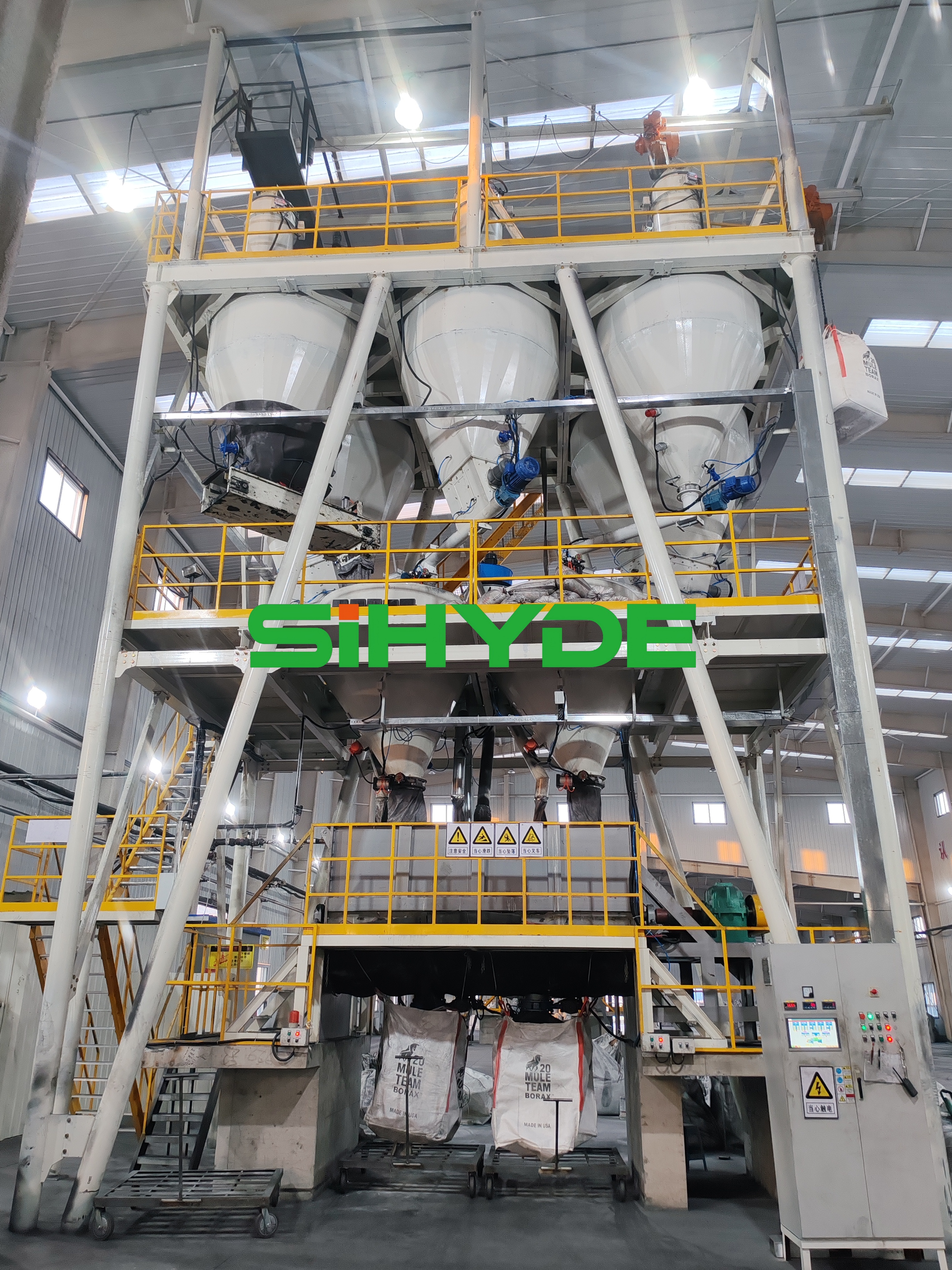
Core Process Modules and Technical Features
The Boron Material Automatic Batching System is designed specifically for the refined, multi-batch production characteristics of boron materials. With a customized small-scale solution for the customer, it integrates five core functional modules: storage, conveying, metering, dust collection, and central control, which work in synergy to ensure a smooth and precise process flow.
1. Multi-bin Dedicated Storage System
- Core Configuration: Equipped with 5 dedicated bins and anti-bridging devices.
- Functional Features: Stores multiple boron-based materials of different forms, including boric acid, dehydrated boric acid, boron anhydride, petroleum coke, and graphite.
- Adaptive Technology: Mechanical or pneumatic anti-bridging devices are installed on the cone section of the bins to prevent blockage of easily bridging materials such as boric acid.
- Advantages:Enables segregated independent storage of multiple materials. The anti-bridging device solves the problem of unstable powder discharge at the source, ensuring continuity of subsequent conveying. Bin volumes are customized according to the customer's small-batch production requirements.
2. Differentiated Conveying System
- Core Configuration: Adopts a dual-mode solution combining "screw conveyor + belt conveyor" .
- Functional Features: Selects the most suitable conveying method based on the characteristics of different materials.
- Adaptive Technology:For dust-prone, poorly flowing powders such as boric acid and boron anhydride, anti-bridging screw conveyors are used; for granular or lumpy materials like petroleum coke and graphite, belt conveyors or conventional screw conveyors are adapted.
- Advantages: One system is compatible with both powders and granular materials, avoiding material blockage or damage caused by a single conveying method, and enhancing the system's ability to handle multiple forms of boron materials.
3. High-precision Weighing and Metering System
- Core Configuration:A PLC-based high-precision weighing and metering module.
- Functional Features: Automatically completes the batching and weighing of boron materials according to preset formulas.
- Adaptive Technology:Uses high-precision weighing sensors, with system dynamic metering error controlled within ≤±0.5% . Supports storage of multiple recipes and one-key switching.
- Advantages: Completely eliminates manual batching errors, ensuring consistent composition and stable quality for each batch of products.
4. Four-stage Dust Collection Network
- Core Configuration:A four-stage pulse dust collection system installed at key points such as feeding, storage, and metering.
- Functional Features: Suppresses dust spillage at multiple stages throughout the entire process.
- Advantages: Controls dust at the source, significantly improves the workshop working environment, ensures production meets environmental and safety standards, and reduces material loss and contamination risks.
5. Central Intelligent Control System
- Core Configuration: PLC controller paired with an industrial-grade touch screen.
- Functional Features: Achieves one-key automatic operation and management of the entire process from "feeding – conveying – metering – mixing".
- Adaptive Technology and Parameters: The operation interface integrates functions such as recipe management, real-time flow monitoring, parameter adjustment, fault alarm, and historical data traceability.
- Advantages: Intuitive and convenient operation, greatly improving production efficiency; traceable data provides a basis for process optimization, helping enterprises realize intelligent production management.
