

Bags and cartons coming off the packing machine end up in palletizing, a stage that relies heavily on manual labor: heavy bags mean intense handling, stacks drift out of alignment, and weight-defective packs are only discovered after they ship inside the stack. The automatic palletizing system chains inline weight rechecking, defective-product rejection, robot gripping, and stack shaping into the end-of-line flow, linked with the upstream batching and packing line. Built on industrial robot core components, inline weight detection, and safety interlocks, it stabilizes stack quality and improves warehouse space utilization.
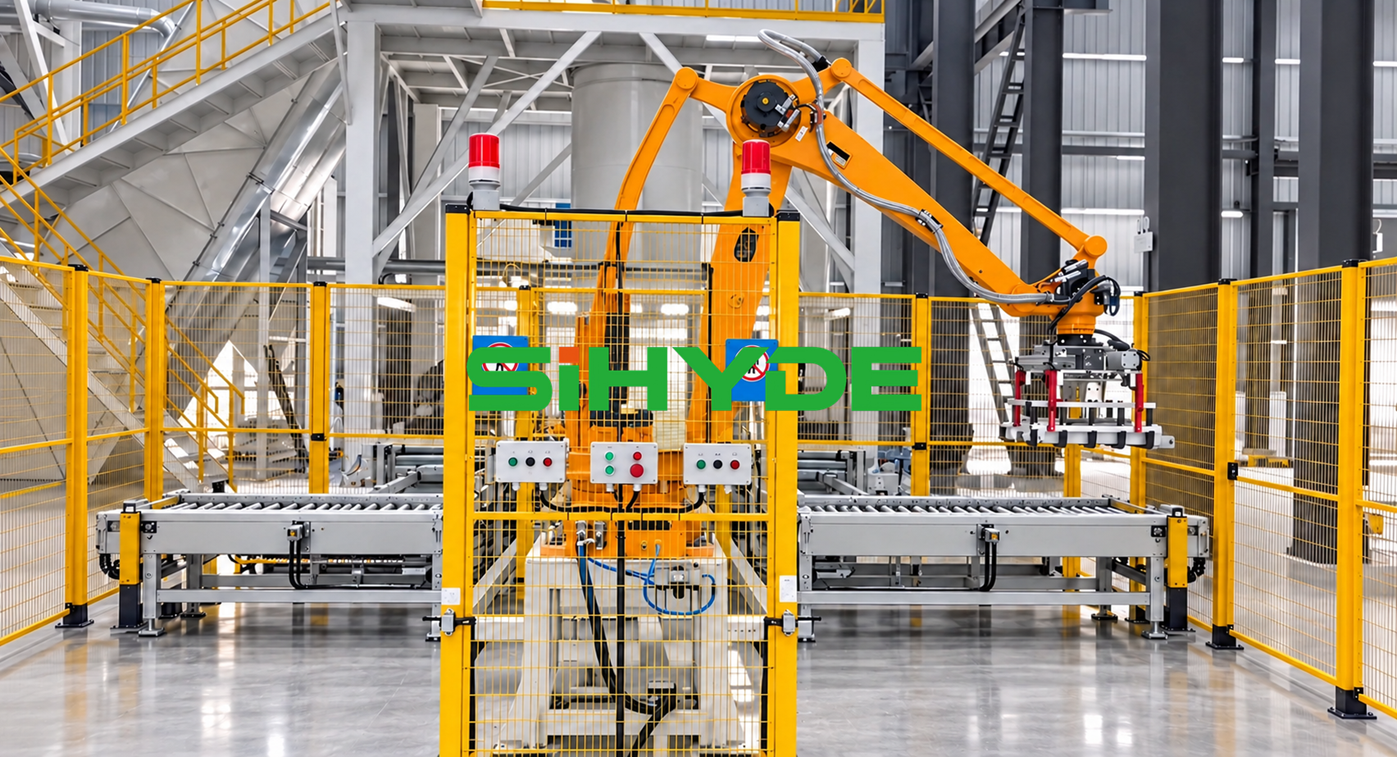
Robot Palletizing Mechanism
• Core components: Industrial robot core components deliver stable, reliable operation with neat, uniform stacking, keeping pallet-position repeatability within a controlled range.
• Packaging compatibility: Bags and cartons run on the same line; woven bags, paper bags, and cartons all enter the same palletizing rhythm, without building a separate line for each pack type.
• Specification changeover: Multiple packaging sizes switch quickly; gripper and stack-pattern parameters adjust with the pack type, so a product change does not require re-teaching the entire trajectory.
Online Weight Recheck and Defect Rejection
• Weight detection: A high-precision weighing detection module performs a weight recheck before products enter the stack.
• Defect rejection: The weight-detection and defective-product rejection devices work in linkage, moving out-of-tolerance packs off the main line so they never enter the stack.
• Traceable records: Recheck results are recorded by batch, keeping end-of-line quality screening consistent with upstream batching data.
Stack Shaping and Ton-Bag Stacking
• Bag pressing: Bagged products are pressed and shaped before gripping, so bags lie flat and layers sit tight, resisting stack collapse in transit.
• Mixed palletizing: Pallet, carton, and mixed palletizing modes switch to match shipping requirements and different warehousing and transport setups.
• Ton-bag assistance: Ton-bag products are handled by an auxiliary stacking stage; heavy bags and ton bags split within the same end-of-line area without competing for rhythm.
Safety Protection and Interlocks
• Multi-layer protection: Safety fencing, emergency stop buttons, and speed monitoring form triple protection; when personnel approach, the robot slows down or stops.
• Line interlocks: The palletizing rhythm links with the packing machine and the batching control system; when upstream feeding stops, downstream stands by, avoiding empty grabs.
• Visible faults: Fault detection and alarm prompts connect to the electrical control system; jammed bags, missing bags, and gripper faults are all visible at the control end.
Application Scenarios and Customer Cases
The automatic palletizing system is configured by packaging form and workshop conditions; four end-of-line categories—chemical, building materials, food, and refractories—are the most common. The automatic packing and palletizing system product page shows line-assembly options.
Large-Scale Sealant Palletizing
• Line configuration: In the Shandong sealant batching production line, six industrial intelligent robots work together at the end of the line, palletizing finished products alongside product conveying.
• Palletizing modes: The line supports pallet, carton, and mixed palletizing, switched by shipping format.
• Efficiency indicator: Under this production line's solution targets, palletizing efficiency is more than 3 times higher than manual palletizing, directly addressing the heavy labor of manual stack work.
Unshaped Refractory Heavy-Bag Palletizing
• Single-gripper palletizing: In the Anhui 30-silo unshaped refractories automatic batching production line, an Estun robot with a single gripper handles palletizing, fed by the upstream unshaped refractories batching system.
• Bag pressing and shaping: A pressing and shaping stage runs before palletizing; 25 kg open-mouth bags are shaped before stacking for a more stable stack.
• Ton-bag stacking: Heavy bags and ton bags are processed in separate zones, with ton bags completed by auxiliary stacking, sharing the same conveying system as the bag line.
Chemical Explosion-Proof Bag Palletizing
• Explosion-proof adaptation: For bagged products in explosion-proof chemical applications, the robot and field electrical components are configured to explosion-proof requirements.
• Enclosed connection: The packing section connects to the palletizing section in an enclosed flow, reducing dust and spillage during transfer; upstream unpacking and feeding can refer to the robot unpacking system.
• Early rejection: Weight-defective packs are rejected before palletizing, avoiding whole-stack rework and secondary handling inside the explosion-proof zone.
Food Hygienic Carton Palletizing
• Hygienic packing: For cartoned products in hygienic food packaging, grippers and the conveying section are laid out to cleanliness requirements.
• Quick changeover: When switching among carton specifications, stack-pattern parameters are called up directly, reducing downtime for adjustment.
• Warehousing connection: After palletizing, the automatic palletizing system connects with product conveying and warehousing, closing the loop from batching to storage. A similar end-of-line example is the reclaimed rubber palletizing line.
Frequently Asked Questions
Q1: Which packaging forms can the automatic palletizing system handle?
A1: It covers both bags and cartons—woven bags, paper bags, and cartons. Stack patterns include pallet, carton, and mixed palletizing; ton bags are handled by auxiliary stacking, and heavy bags and ton bags can be split within the same end-of-line area.
Q2: How does palletizing prevent weight-defective packs from shipping?
A2: Through weight rechecking and rejection before stacking. Products are rechecked by the high-precision weighing detection module; out-of-tolerance packs are moved off the main line by the rejection device and never enter the stack. Recheck results are kept by batch and can be compared with upstream batching data.
Q3: How is robot palletizing protected for safety?
A3: The automatic palletizing system relies on fencing, emergency stops, and speed monitoring. Safety fencing separates the robot from personnel walkways, emergency stop buttons are placed at operating positions, and speed monitoring limits robot motion when people approach, interlocked with the packing machine and batching line for linked shutdown.
Conclusion
The automatic palletizing system takes over the physical end-of-line work after batching and packing: handling, stacking, and rechecking. Robots deliver stable gripping and neat stacks, inline weighing keeps defective packs out of the stack, and shaping and interlocks keep the end of the line in step with the front. For workshops with heavy products and large shipping volumes, straightening out this stage makes warehouse utilization and shipping rhythm far more controllable.
