

In high‑temperature industrial sectors such as steeland glass, refractories are critical to the safe operation of kilns. Traditional flat‑layout production lines suffer from large footprints and inefficient process connections. The Sihyde tower‑type batching line adopts a vertical layered design, concentrating storage, metering, batching, and mixing within a multi‑story building, allowing raw materials to flow downward by gravity. The line offers four core advantages – small footprint, high accuracy, fast throughput, and environmental excellence – helping refractory manufacturers upgrade their batching operations intelligently.
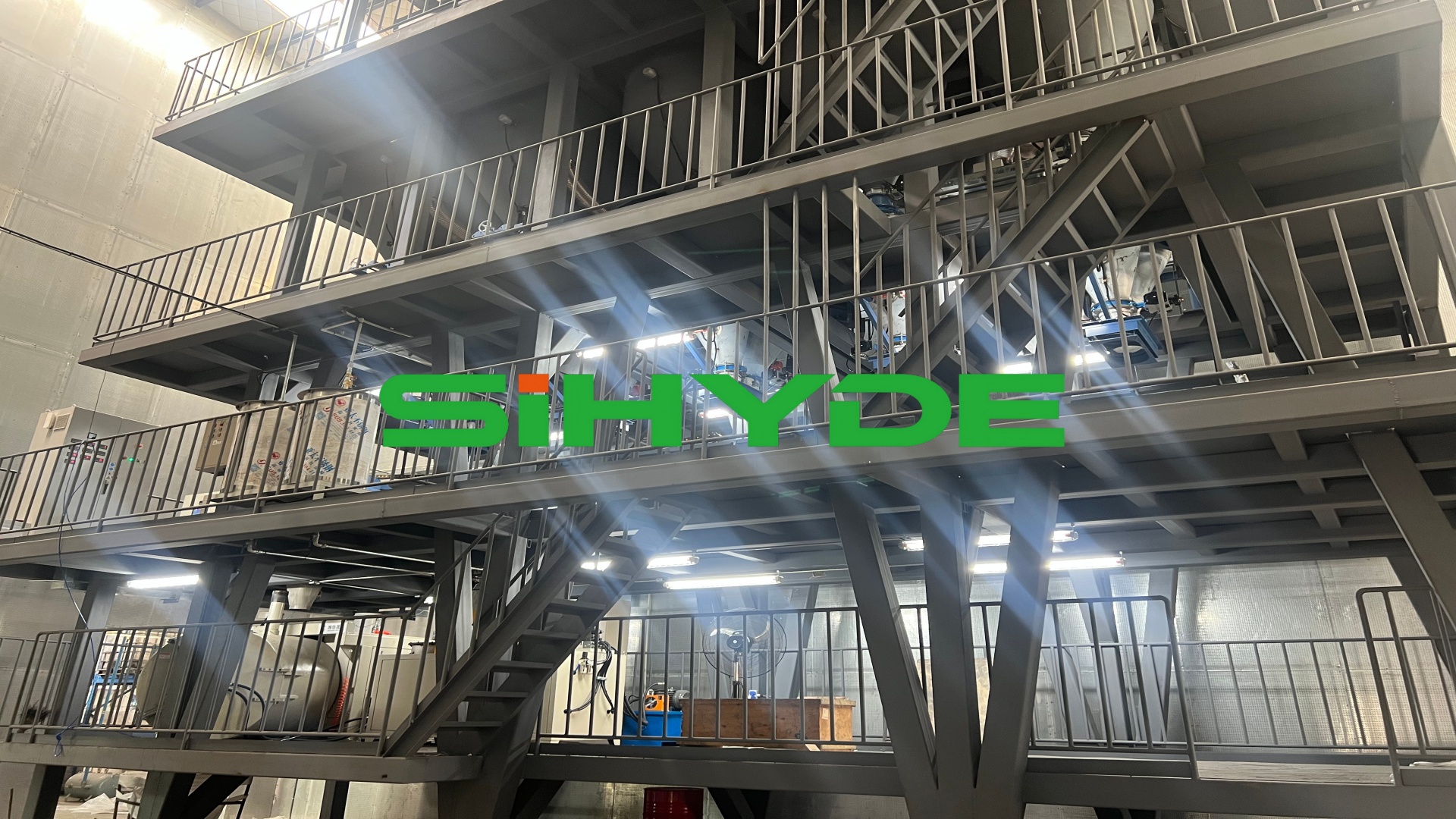
Raw Material Storage Area
Impurity screening: Each raw material silo is equipped with a wire mesh at the inlet to effectively filter out impurities, preventing substandard materials from entering production.
Anti‑blocking design: Depending on the material characteristics, bin vibrators are installed to prevent caking and blocking, ensuring smooth discharge.
Level monitoring: Weighing‑type level indicators continuously monitor silo capacity and provide refill signals; they can also anticipate material demand based on recipes.
Core Batching Area
Feeding configuration: The system includes 10 vibratory feeders for granular materials and 4 twin‑drive screw feeders for powdery materials, with fast‑slow feeding coordination to ensure precise discharge.
Batching method: A batching trolley moves along a track to sequentially dock with different raw material silos; its onboard weighing unit measures each material individually to achieve the required recipe proportions accurately.
Dust‑tight operation: The entire batching process is fully enclosed, and the trolley is equipped with a pulse dust collector to minimise dust leakage at source.
Mixing and Finished Product Handling Area
Mixing process: After batching, materials are conveyed via a skip hoist to the mixer, where they are mixed according to process specifications; an automatic discharge gate then drops the mixture into a designated holding silo.
Packaging integration: The material is then transferred to the packaging station and packed by an automatic bagging machine.
Dust collection: A dedicated bin dust collector captures dust generated during mixing and packaging; the collected material can be returned to the packaging silo to avoid waste.
Intelligent Control System
Full‑process automation: PLC control technology, in coordination with a host supervisory system, main controllers, and field detection devices, achieves automated control over batching, mixing, dust collection, and other processes.
Recipe management: Operators set recipe parameters and monitor production status via an industrial computer; the system automatically executes batching, mixing, and discharging tasks.
Data reporting: The system generates raw material consumption reports to facilitate production management.
Application Scenarios and Customer Cases
Shaped Refractory Production
Magnesia‑carbon bricks: Suitable for automated batching of magnesia‑carbon brick production.
Corundum bricks: Meets the precise batching requirements for corundum bricks.
Diatomite bricks: Adaptable to the batching process for diatomite bricks.
Refractory Manufacturers of Various Scales
Large‑scale refractory plants: Can adopt the complete tower‑type batching line to meet annual capacity needs.
Plants with limited land: The tower layout occupies only about 1/5 of the floor space of a flat‑layout line, making it especially suitable for factories with space constraints.
Plants pursuing intelligent upgrades: Full‑process automation and data management facilitate production management upgrades.
Frequently Asked Questions
Q1: What batching accuracy can the tower‑type line achieve?
A1: The line uses static batching, with an accuracy better than 0.2%, effectively ensuring consistent refractory quality.
Q2: How efficient is the tower‑type line?
A2: One batching cycle takes only 2–3 minutes, with an hourly throughput of 10–18 tons. The tightly connected process enables continuous production.
Q3: What are the advantages over traditional flat layouts?
A3: The tower‑type line occupies only about 1/5 of the floor space; its fully enclosed operation combined with a centralised dust collection system greatly improves the workshop environment; and full automation reduces manual intervention, minimising human influence on product quality.
Conclusion
The Sihyde tower‑type batching line is built around a vertical layered design, integrating raw material storage, precise batching, mixing/packaging, and intelligent control within a multi‑story structure. Materials flow downward by gravity, ensuring tight process continuity. The line achieves batching accuracy better than 0.2%, a cycle time of only 2–3 minutes, an hourly capacity of 10–18 tons, and a footprint only about 1/5 that of a flat layout. The fully enclosed operation with a centralised dust collection system improves the workshop environment while preventing material waste. The line has been widely applied in the production of shaped refractories such as magnesia‑carbon bricks, corundum bricks, and diatomite bricks, and can be scaled to meet various annual capacity requirements.
