

In chemical production, the precision of raw material proportions directly determines product quality. However, traditional manual batching suffers from pain points such as low efficiency, large errors, and severe dust pollution. The emergence of automated batching equipment not only solves these problems but also becomes the core pillar for the intelligent upgrading of chemical enterprises. To maximize the value of automated batching equipment, it is first necessary to clarify which raw materials are suitable for automated batching, and then master scientific selection methods.
I. Common Raw Materials for Automated Batching in the Chemical Industry
Chemical raw materials are diverse, divided into solid and liquid categories by form, with different forms corresponding to different automated batching solutions. These raw materials are widely used in rubber and plastic chemicals, powder metallurgy, coatings, battery materials and other sub-sectors.
(1) Solid Raw Materials: Precise Control of Powders and Granules
Solid raw materials are the main targets of chemical automated batching, especially powders and granules. Some viscous solids can also be automatically batched through special equipment.
Powder raw materials: These materials have large differences in fluidity, some are prone to dust and arching, making them key targets for automated batching. Common examples include peptizers, zinc oxide, magnesium oxide, zinc stearate, antioxidants DTPD and 4010 in rubber and plastic chemicals; reduced iron powder, atomized iron powder, electrolytic copper powder in powder metallurgy; pigments such as titanium dioxide and iron oxide red; and non-metallic powders like sulfur powder and graphite powder. For example, in tire production, the proportioning precision of powder raw materials such as antioxidants and accelerators directly affects the anti-aging performance of tires, and errors can be controlled to an extremely low range through automated batching.
Granular raw materials: Including resin pellets, plastic particles, composite mineral fibers, etc. These materials have good fluidity and stronger adaptability. In plastic modification production, the precise proportioning of resin pellets and fillers such as glass fiber relies on automated equipment to achieve continuous and stable feeding.
Viscous solid raw materials: Such as sulfur paste, which are prone to adhesion. They require special feeding devices, with heating or vibration to assist blanking, ensuring smooth and precise batching.
(2) Liquid Raw Materials: Precise Delivery Under Viscosity Differences
Liquid raw materials have significantly different delivery and metering methods depending on viscosity, from low-viscosity solvents to high-viscosity resins, all have corresponding automated solutions.
Low-viscosity liquid raw materials: Such as various chemical solvents, thinners, water-soluble additives, etc. These materials have good fluidity, and electromagnetic flowmeters combined with solenoid valves are commonly used for precise metering and control, suitable for batching links in coatings, adhesives and other industries.
High-viscosity liquid raw materials: Including resins, coatings, lubricating oils, plasticizers, etc. These materials are prone to wall adhesion and slow flow, requiring gear pumps or screw pumps for delivery, combined with precise weighing modules for metering. For example, in adhesive production, the proportioning precision of high-viscosity resins and curing agents directly affects the bonding strength of products.
(3) Special Raw Materials: Safe Adaptation of High-Risk and Fine Materials
Some chemical raw materials are flammable, explosive, toxic, harmful, or have ultra-high fineness, making manual batching extremely risky, which are core demand scenarios for automated batching. For example, ultra-fine powders such as lithium carbonate, manganese dioxide, and precursors in battery materials require closed batching under nitrogen protection to prevent oxidation and pollution; flammable and explosive chemical reagents need to be adapted to explosion-proof automated equipment to avoid potential production safety hazards.
II. Key Points for Selecting Automated Batching Equipment: Precisely Matching Production Needs
The selection of automated batching equipment is not "the bigger the better" or "the more precise the better", but should be comprehensively considered from multiple dimensions such as raw material characteristics, production scale, precision requirements, and safety specifications. The core is to achieve the production goals of "precision, efficiency, safety, and compatibility".
(1) Core Premise: Adaptation to Raw Material Characteristics
Raw material characteristics are the basis of selection, directly determining the configuration of core components of the equipment. For raw materials of different forms, focus on the following points:
Fluidity and delivery method:For powder raw materials prone to arching, silos equipped with vibration flow aids or pulse jet blockage removal devices should be selected, combined with screw feeders or pneumatic conveying systems; granular raw materials can use belt scales or vibratory feeders; high-viscosity liquids need to be matched with screw pumps, and low-viscosity liquids can use electromagnetic flowmeter systems.
Corrosiveness and equipment material: For corrosive raw materials such as acidic and alkaline ones, the parts of the equipment in contact with materials need to be made of corrosion-resistant materials, such as 316L stainless steel and PTFE lining, to avoid equipment damage and raw material pollution.
Dust and toxicity prevention:Powder raw materials prone to dust should use fully enclosed batching systems equipped with pulse jet dust collectors to achieve source dust suppression; toxic and harmful raw materials need to be strengthened with closed design to ensure no leakage and protect operational safety.
(2) Core Indicator: Control of Metering Precision
Batching precision is the lifeline of chemical product quality. Different industries and products have significantly different precision requirements, so corresponding metering equipment should be selected according to actual needs.
Accuracy grade selection: For ordinary chemical products, equipment with an accuracy of ±0.5% can be selected; for fields with extremely high precision requirements such as fine chemicals and pharmaceutical intermediates, loss-in-weight scales (accuracy ±0.1%~0.5%) or micro scales (accuracy ±0.01%~0.1%) are required, especially suitable for the precise proportioning of micro additives such as antioxidants and accelerators with extremely low proportions.
Metering method adaptation: Solid raw materials are commonly weighed, and liquid raw materials can be weighed or flow-metered according to viscosity. For continuous production scenarios, loss-in-weight scales can achieve dynamic continuous metering and real-time compensation for material density fluctuations; for batch production scenarios, batch weighing systems can be selected to ensure consistent proportioning for each batch.
(3) Production Adaptation: Capacity and Flexible Demand
Equipment capacity must be precisely matched with production scale, while taking into account the flexible needs of multi-variety production.
Capacity matching: Select equipment specifications according to the number of daily or hourly batching batches and the batching volume per batch. For example, small-scale production can choose equipment with a maximum weighing capacity of 15~60kg, while large-scale production requires large equipment of 600~1200kg. The multi-scale head design can increase batching efficiency to 60 batches/hour to meet high-capacity demands.
Flexible production: For enterprises with multi-variety, small-batch production, modularly designed equipment should be selected, supporting rapid material changeover and model change (changeover time <5 minutes), and can store more than 100 formulas for one-click calling, greatly improving order response efficiency. For example, in the multi-variety production scenario of the refractory material industry, the 30-bin modular batching system can achieve rapid switching of different formulas, reducing the formula change time from 2 hours to 3 minutes.
(4) Safety Bottom Line: Compliance and Protection Design
Safety is the top priority in chemical production. Automated batching equipment must meet industry safety specifications, with a focus on explosion protection, leakage prevention, and environmental protection requirements.
Explosion-proof requirements: In flammable and explosive environments, equipment must be equipped with explosion-proof motors and spark detection systems, complying with explosion-proof standards such as ATEX, to avoid safety accidents caused by electrical sparks.
Environmental compliance: The equipment must have dust recovery and waste liquid collection functions, ensuring that dust emissions meet ISO 14644 Class 8 standards, reducing solid waste emissions by more than 20%, and meeting the requirements of green factories.
Emergency protection: The system must have an abnormal alarm function. When the batching deviation exceeds the preset value, equipment failure or raw material shortage occurs, it can automatically pause and alarm, while retaining production data for traceability and troubleshooting.
(5) Long-Term Consideration: Intelligence and Compatibility
With the intelligent upgrading of chemical enterprises, the intelligence level and system compatibility of equipment have become important selection indicators.
Intelligent functions: Priority should be given to equipment equipped with PLC+SCADA control systems, supporting dynamic visual monitoring of the production process, formula management, data traceability, and generating shift reports, daily reports, and monthly reports to meet the requirements of quality systems such as ISO 9001.
System compatibility: The equipment must support docking with enterprise ERP systems (such as SAP, Kingdee, Yonyou), enabling direct import of production plans and BOM lists, and automatic back-transmission of batching data for material deduction, avoiding secondary input errors and improving production collaboration efficiency.
III. Conclusion: Precise Matching to Achieve Maximum Value
The core of selecting automated batching equipment in the chemical industry is "raw material characteristic adaptation + production demand matching". By clarifying the form, characteristics, and precision requirements from the raw material side, and locking in capacity, safety, and intelligent requirements from the production side, the most suitable equipment can be selected. Automated batching not only improves efficiency and reduces labor costs but also ensures product quality stability through precise proportioning, reduces raw material waste, improves the working environment, and helps chemical enterprises achieve green and intelligent transformation. In the future, with the integration of technologies such as digital twins and blockchain traceability, automated batching equipment will bring more efficient and transparent upgrading experiences to chemical production.
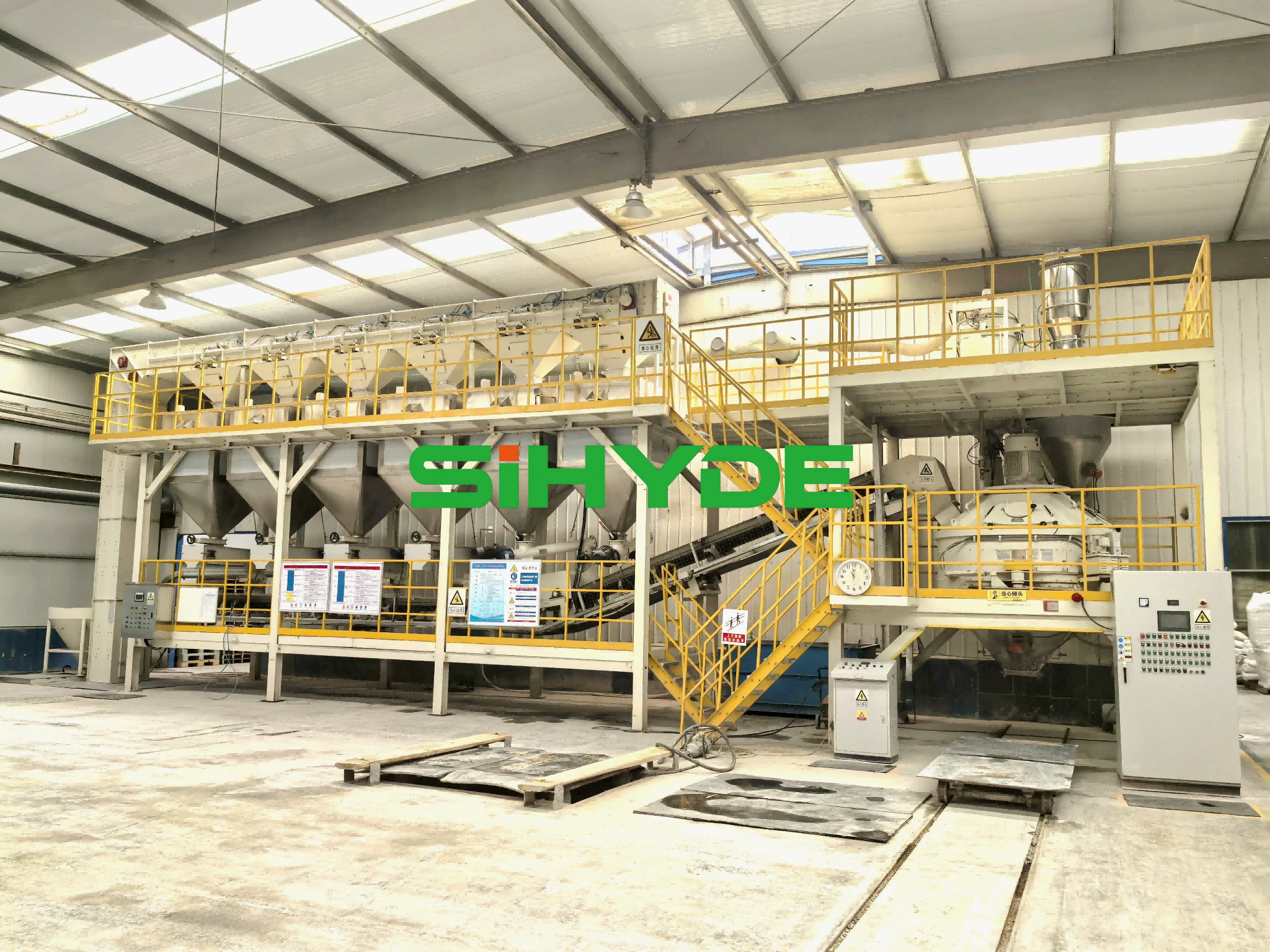
As a national technological innovation enterprise deeply engaged in the field of automated batching, Sihyde supports 45 patented technologies, deeply integrating precise metering, environmental protection, and flexible production to provide customized solutions for various solid, liquid, and high-risk special raw materials in the chemical industry. From ±0.2% high-precision metering systems to fully enclosed dust removal designs, from modular rapid production changeover (formula change in only 3 minutes) to seamless MES/ERP system integration, from 24/7 technical support to full-life-cycle operation and maintenance services, every detail precisely matches the core demands of chemical production. Choosing Sihyde is not only choosing efficient and stable batching equipment, but also choosing a transformation path for cost reduction and efficiency improvement, and a production guarantee for compliance and environmental protection.
